Test The Lord of the Rings
Which leader reflects your choices?
A failing gate, cold travellers and uncertain news. Ten scenes about shelter, authority and handing over: how do you guard a passage without promising everyone the same safety?
PICTURE THE SCENE
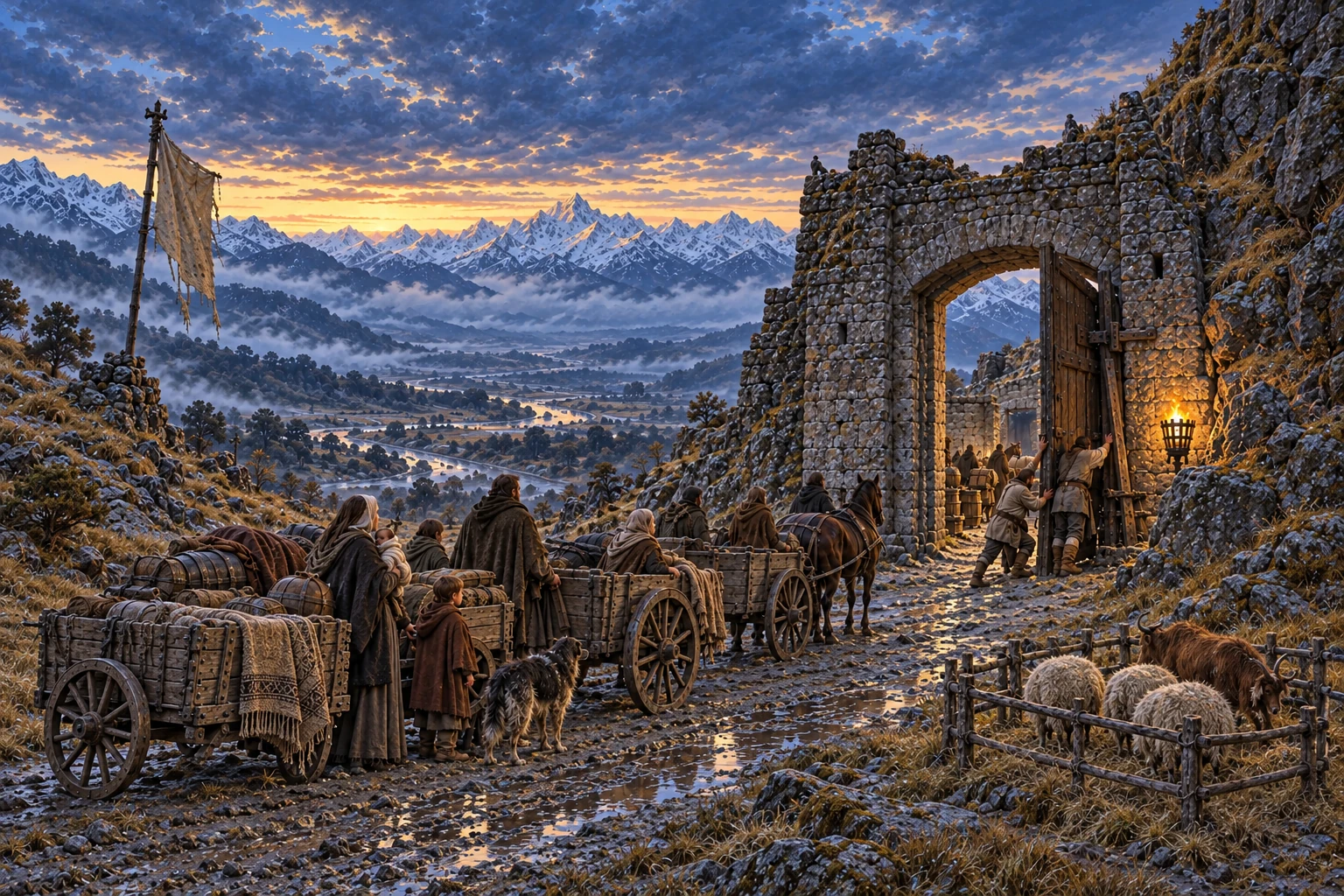
Before dawn, among the mountains between Rohan and Gondor, you help Mira keep a small invented roadside gate. The person in charge has left to seek news of the road. Dora arrives with her family, unmarked carts and a flock; Elan appears from the bend with muddy boots and a broken seal. The supplies will not last for everyone, and the gate is weighing more heavily on its supports. You have no crown or army: you have one night, a few available hands and a key you will have to pass on. Each choice may affect who finds shelter, who waits and what risk remains on the road.
Tap to make each choice. Your result is free.
Original unofficial fan fiction: the gate, families and companions are invented. The four portraits use the opening of Peter Jackson’s The Return of the King, before Pelennor, as their narrative boundary, distinguishing an heir, a king, a Marshal and the Steward. The images also draw on clothes and a photograph from earlier scenes in the trilogy, identified in the portraits and sources; they are not images of this fan night. No final fates are revealed. These are four selected figures of authority in Rohan and Gondor, not a list of everyone capable of leading.
The world behind the story
Warner Bros Japan — The Lord of the Rings: The Return of the King (2003) ↗Wētā Workshop — Éomer on Firefoot (The Two Towers) ↗Wētā Workshop — King Théoden (The Two Towers) ↗Wētā Workshop — Aragorn, miniature film design ↗New Line / Reprise — Doug Adams, The Two Towers Annotated Score, pp. 20, 41 ↗How this quiz works
10 choices or questions, taking about 9 minutes to read and answer. Reading your result takes additional time, at your own pace.
Your choices shape an original journey and lead to a narrative portrait. There are no right answers: you can go back and change your mind.
Your answers stay in the page’s memory. Read how the results are created.