Test One Piece
One Piece: What Would Your Crew Role Be?
Your ship’s first regatta changes course when a Transponder Snail rings. Between an unlit lighthouse, an incomplete chart and breakfast above the sea, what place would you like to build in the crew?
PICTURE THE SCENE
You bought the ship together: coins counted on the table, a favour returned, a promise nobody has yet managed to paint on the white flag. Today you will enter your first regatta. The prize would replace the patched sail, but you already like this old boat being yours. Offshore, an island of spiralling rocks carries a lighthouse on its summit; for the night race, it must shine at sunset. Sira has checked the route, the shipwright has finished the repairs and the doctor has put away their bag. Your sack is still in the middle of the deck beside a pink Transponder Snail with a blue shell. Before anyone assigns you a corner, you wonder what you want to bring aboard this ship.
Tap to make each choice. Your result is free.
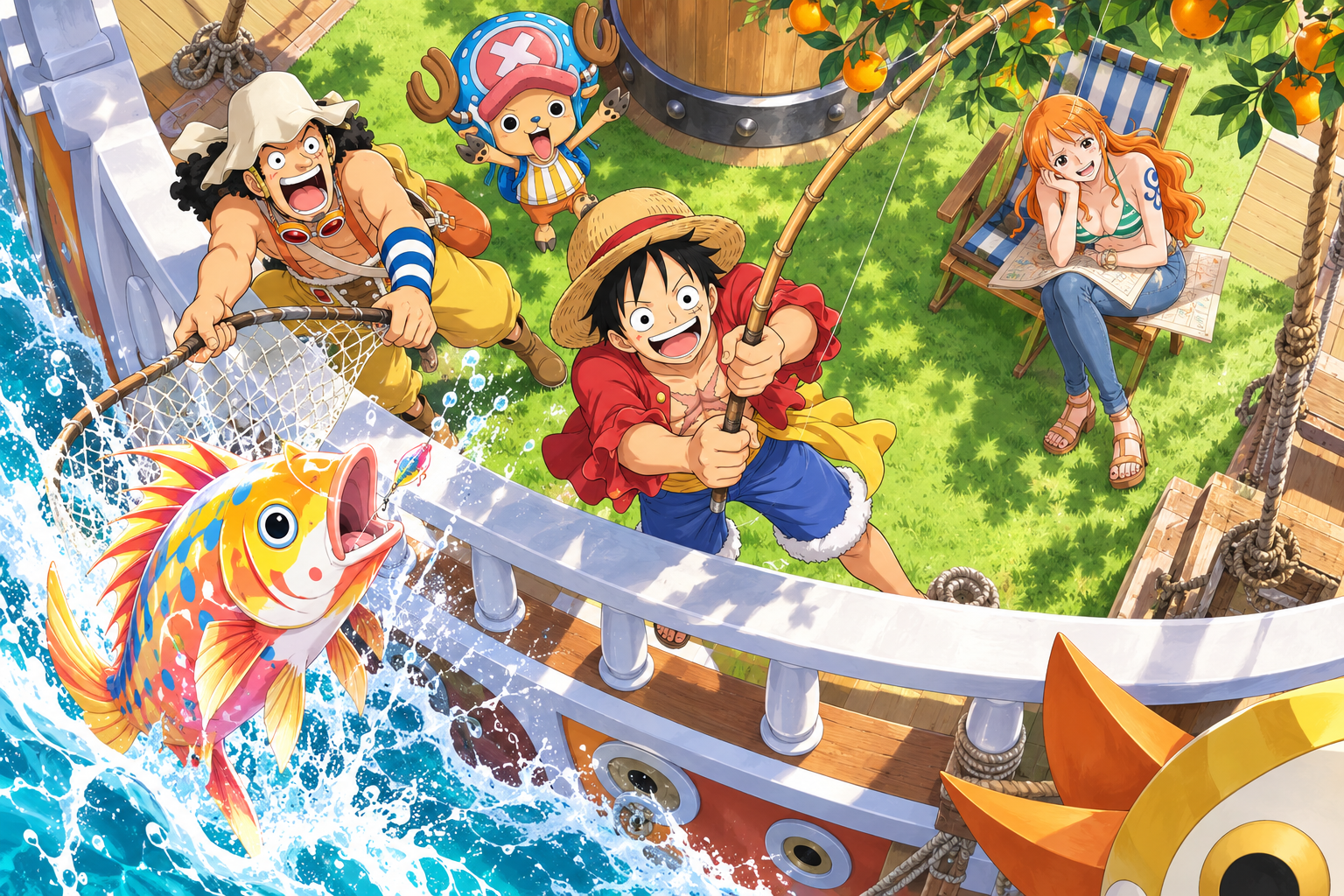
An original, unofficial fan adventure: the ship, crew, Sira, Orris, island, lighthouse, regatta and events are invented. The result suggests a narrative affinity with six roles present in One Piece, rather than testing professional skills or offering a scientific assessment. The images use canonical characters as examples of the roles, without assigning the visitor their identities or powers; they are not the members of the original crew met in the questions. The selection does not list every role in the series. Designs follow ONE PIECE ODYSSEY after the time skip; the story requires no developments after Dressrosa. The original chart, walls and tower are not Poneglyphs or new canonical inscriptions. Actual medical, nautical and technical skills belong to the companions who possess them within the fiction. Exploring the interface is optional and assesses neither speed nor precision.
The world behind the story
ONE PIECE ODYSSEY: crew roles and designs ↗ONE PIECE ODYSSEY: Transponder Snails in Water Seven ↗How this quiz works
9 choices or questions, taking about 11 minutes to read and answer. Reading your result takes additional time, at your own pace.
Your choices shape an original journey and lead to a narrative portrait. There are no right answers: you can go back and change your mind.
Your answers stay in the page’s memory. Read how the results are created.