Test Naruto
Which Naruto Sand character are you?
The alley’s water jugs have a destination; you want to play music. At Suna’s festival, a cracked bowl takes the highest note from the melody. Can you still want that lost sound and enjoy what remains? Seven scenes about the pleasure of taking part, alongside the three Sand siblings.
PICTURE THE SCENE
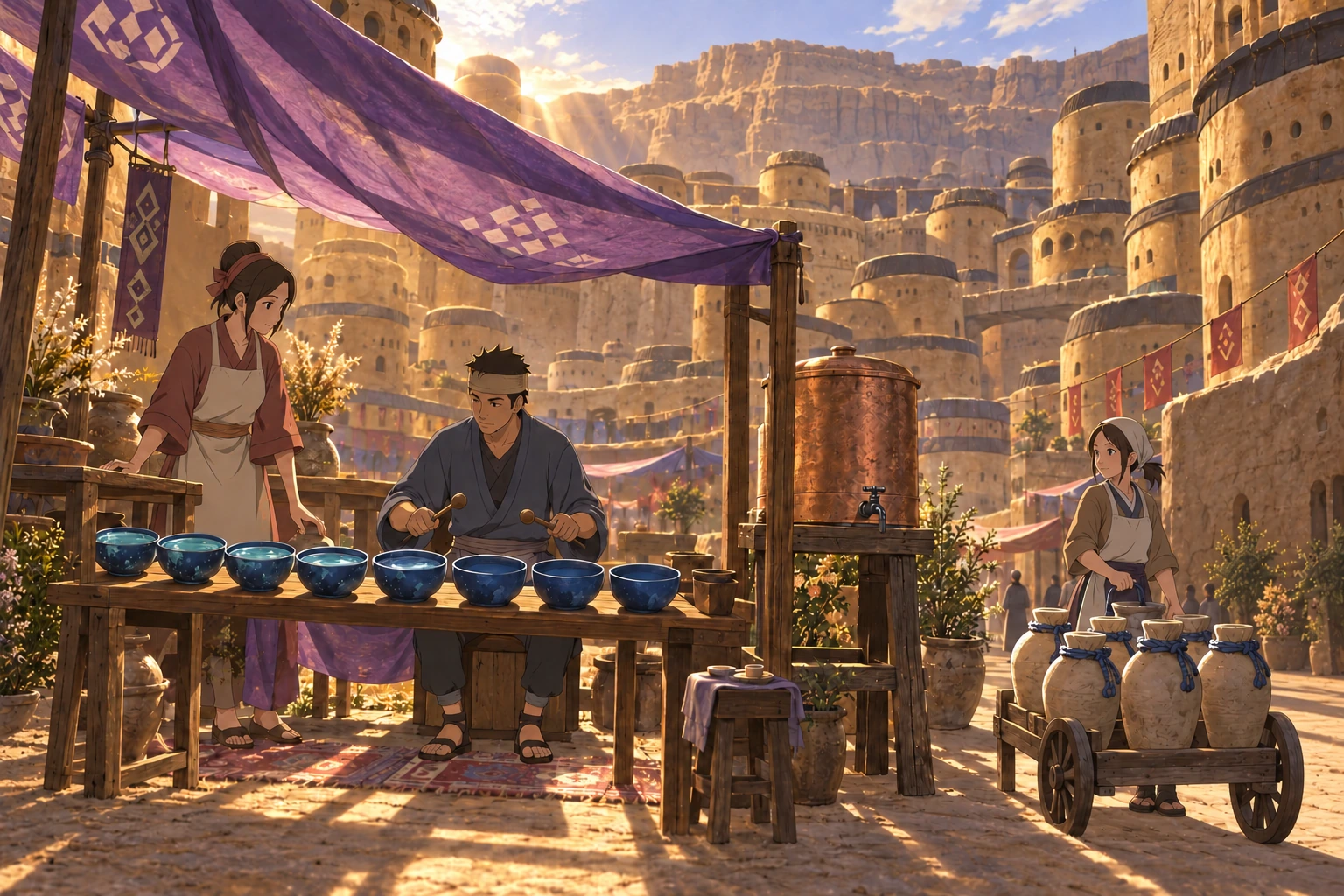
In Suna, beneath a purple canopy, Hama has lined up eight blue bowls. Reto will play them with two beaters, using a little water at different levels. Nuri prepares six covered jugs with blue cords for the alley’s homes: their water is separate from the concert water. You promised to help deliver them. Then Reto points to the stool beside him: ‘When you come back, this is yours. Today you play too.’ At other festivals, people mostly saw you carrying, building and tidying. You like those things, but this morning, at the first tap on an empty bowl, you wanted to stay without taking another job. A light breeze comes from the canyon; there is no audience in the square yet.
Tap to make each choice. Your result is free.
An original InnerFable civilian fan adventure in Suna during early Naruto Shippuden, the Kazekage Rescue arc, episodes 1–32. The festival, Hama, Reto, Nuri, your role, the cistern and all events are invented. The three portraits compare your choices with Gaara, Temari and Kankuro, the Sand siblings; they do not represent every Sand ninja. This festival and the illustrated civilian uses of their abilities are original fan inventions. You gain no ninja techniques or abilities. Earlier character history may be recalled; the war and subsequent developments are excluded. Music water stays separate from drinking water.
The world behind the story
Gaara — growth, Kazekage role and defence of Suna ↗Temari — Return of the Kazekage, Shippuden episode 32 ↗Kankuro and Baki — the pursuit, Shippuden episode 7 ↗Kankuro — three puppets and the Sasori battle, manga volume 28 ↗Temari intervenes against Tayuya — original Naruto, episode 125 ↗How this quiz works
7 choices or questions, taking about 7 minutes to read and answer. Reading your result takes additional time, at your own pace.
Your choices shape an original journey and lead to a narrative portrait. There are no right answers: you can go back and change your mind.
Your answers stay in the page’s memory. Read how the results are created.