Test Attack on Titan
Attack on Titan: which regiment would you join?
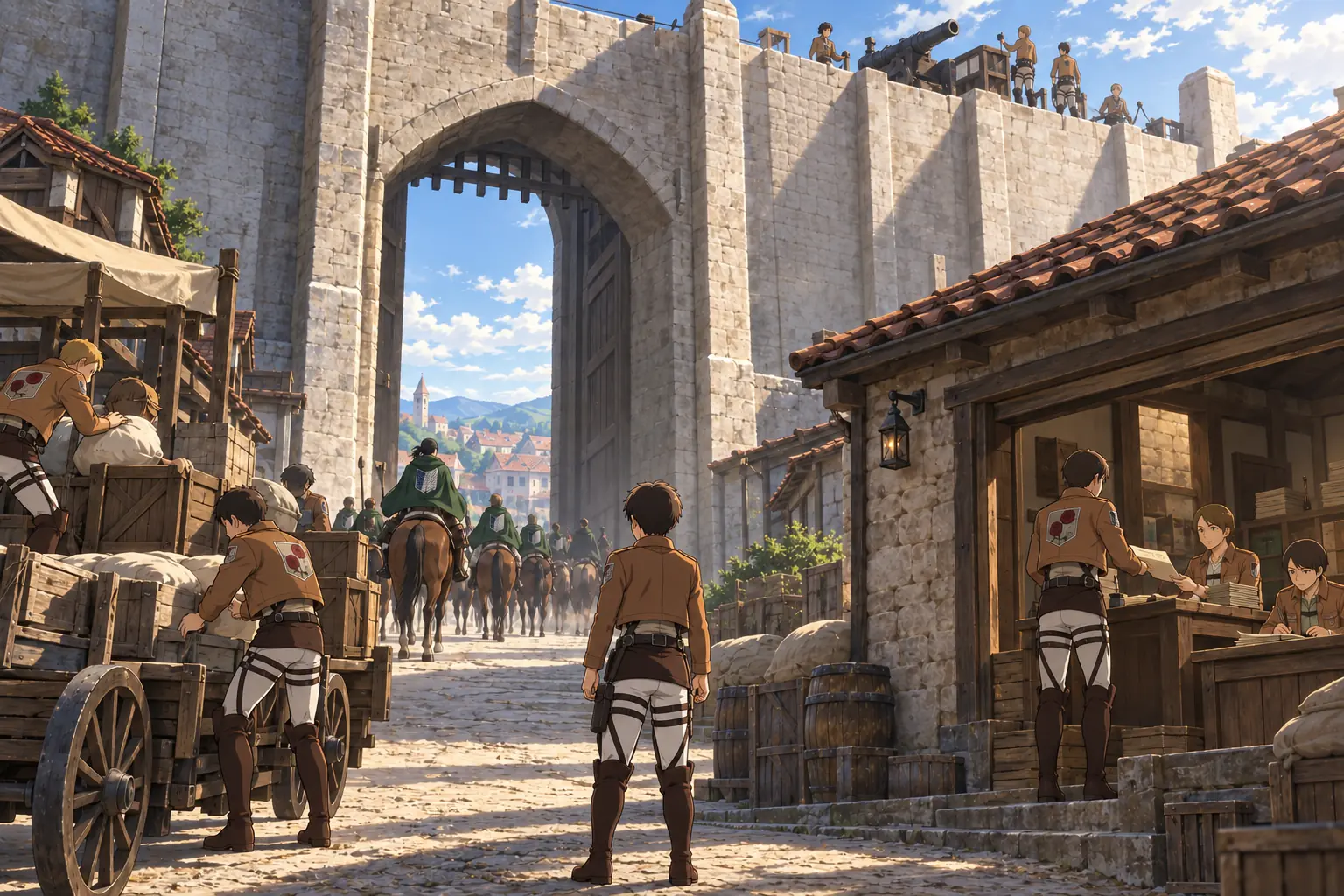
An opening gate, a frightened horse and a return through dust: follow eleven connected scenes to explore the Scout Regiment, the Garrison or the Military Police.
PICTURE THE SCENE
Spoiler notice: Attack on Titan TV anime Season 1, episodes 1–25. At the end of training, you spend a day shadowing soldiers near a city gate. Daro from the Garrison takes you onto the Wall; Scout Selma prepares to leave; visiting Military Police soldier Iva demonstrates street patrol work. Then a cart blocks the passage and dust fills the sky. You do not command the garrison: you can observe, help with an assigned task or call for assistance. This original fan fiction follows one continuous day through to the evening return. Your choices explore which of the three regiments you would like to join, without awarding a rank or a place in the graduating class.
Tap to make each choice. Your result is free.
Original, unofficial, noncanonical fan fiction. Edition: the 2013 TV anime, Season 1, episodes 1–25; spoiler notice. Daro, Selma, Iva, the other participants and the day of work shadowing are invented. The Scout Regiment, Garrison, Military Police, training before choosing a regiment, ODM equipment and fixed Wall cannons are canonical. In the work, entry to the Military Police after training is restricted to the ten highest-ranking graduates: this quiz explores a preference and does not calculate that ranking. The illustrated soldiers are original examples of the three regiments, not identified canon characters. No outcome promises safety, moral superiority or a measure of real ability.
The world behind the story
TV anime Attack on Titan — Season 1 glossary ↗TV anime Attack on Titan — Season 1, episode 3 ↗TV anime Attack on Titan — Season 1, episode 4 ↗TV anime Attack on Titan — Season 1, episode 16 ↗Attack on Titan — regiment names, Koei Tecmo website ↗Attack on Titan — Season 1 episode 23 and Military Police patrol ↗How this quiz works
11 choices or questions, taking about 10 minutes to read and answer. Reading your result takes additional time, at your own pace.
Your choices shape an original journey and lead to a narrative portrait. There are no right answers: you can go back and change your mind.
Your answers stay in the page’s memory. Read how the results are created.